
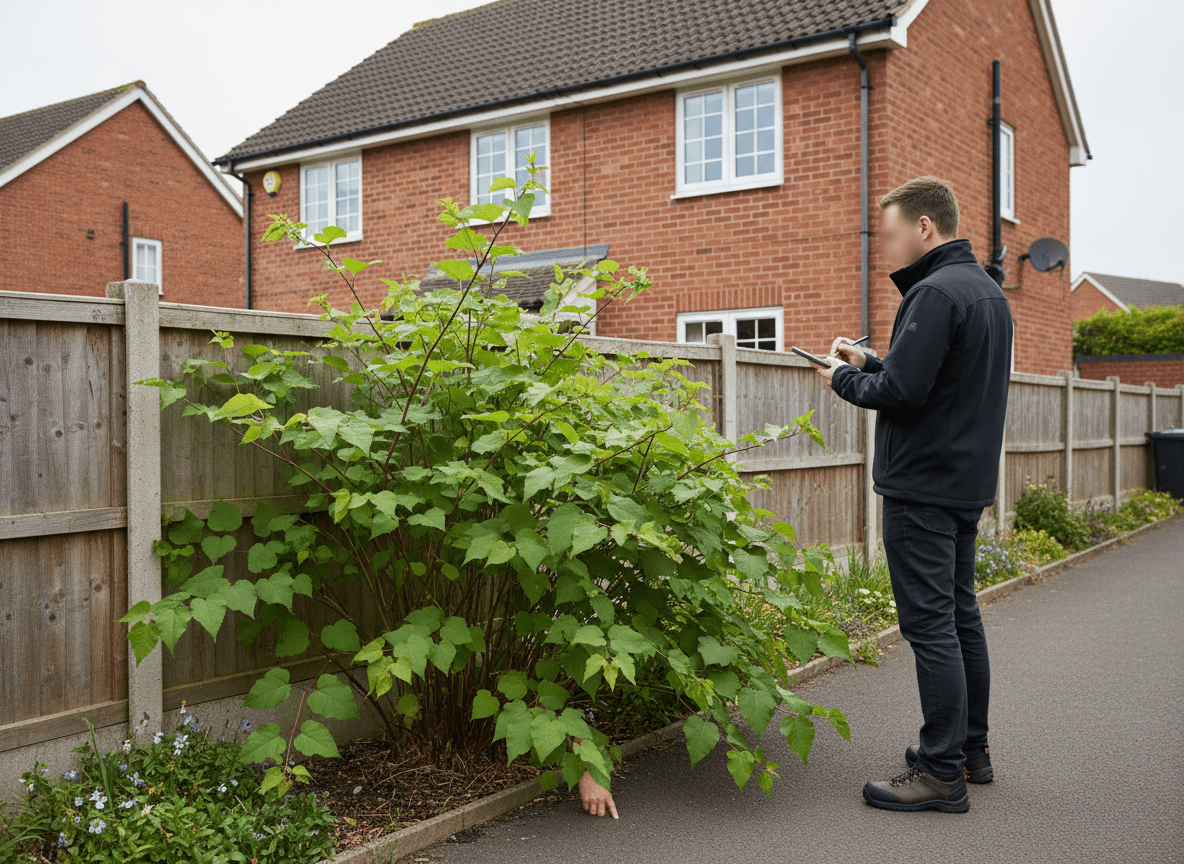
Yes, it can. Japanese knotweed can affect property value because buyers, lenders, and valuers all look at risk. The impact is not always the same from one property to the next, but it can influence how easy the property is to sell, how it is viewed by a surveyor, and what a buyer feels comfortable paying.
That does not mean every mention of knotweed leads to a collapsed sale. It does mean you need clear information. Buyers want to know how serious the issue is. Sellers want to know what questions are likely to come up. Surveyors want evidence, not guesswork.
Quick answer: Japanese knotweed can reduce buyer confidence and affect property value, especially where growth is active, close to structures, or poorly documented. Lyman Marshall already states on its live site that knotweed can devalue a property by up to 20%, depending on the extent of growth, the location, treatment costs, and whether damage has been caused. ([lmsurveyors.co.uk](https://lmsurveyors.co.uk/how-much-does-japanese-knotweed-devalue-property/))
Simple rule: the more uncertainty there is around knotweed, the more likely it is to affect value, lending, and negotiation.
Contents
Why knotweed can affect value
Property value is not only about bricks, rooms, and postcode. It is also about risk. A buyer does not just ask, “What is this house worth?” They also ask, “What problems might come with it?” Japanese knotweed changes that conversation because it brings uncertainty around treatment, ongoing monitoring, saleability, and sometimes physical impact.
Lyman Marshall’s live knotweed article says the effect on value depends on the extent of infestation, the location on the site, the likely treatment or removal cost, and whether any structural damage has already happened. That is a useful way to frame it because it shows the issue is not just the plant itself. It is the level of risk attached to it. ([lmsurveyors.co.uk](https://lmsurveyors.co.uk/how-much-does-japanese-knotweed-devalue-property/))
If buyers think the issue is uncertain, expensive, or likely to make resale harder later on, they often respond in one of three ways. They lower their offer, ask for more evidence, or walk away. That is where the effect on value becomes very real, even before any formal figure is agreed.
Why the impact is not the same every time
Two properties can both have knotweed and still be viewed very differently.
One may have a documented treatment plan, clear records, and growth that is already under control. Another may have uncertain spread, no paperwork, and visible growth close to built structures. Those are not the same risk in the eyes of a buyer or surveyor.
This is why there is no single fixed percentage that applies to every case. The live Lyman Marshall post gives the broad point that value can be affected by up to 20%, but it also makes clear that the exact amount depends on the facts of the case. ([lmsurveyors.co.uk](https://lmsurveyors.co.uk/how-much-does-japanese-knotweed-devalue-property/))
That is a useful message for both buyers and sellers. The plant matters, but so does the context around it.
Factors that can change the impact
- how close the knotweed is to the building
- how established the growth appears to be
- whether there is a treatment history
- whether the issue is active, historic, or uncertain
- whether lenders or buyers raise concern during the transaction
- whether there are signs of related damage or site disturbance
What this really means is simple. Value is shaped by confidence. Strong records and a clear picture can limit uncertainty. A lack of evidence usually does the opposite.
What a surveyor is likely to look at
A surveyor is not there to create drama. They are there to assess what is visible, what it may mean, and what level of concern it raises in a property context.
If the issue is raised during a property inspection, the surveyor may consider the location of the growth, its apparent spread, its relationship to the house and boundaries, and whether there are visible signs that it may affect use, marketability, or confidence in the property.
Lyman Marshall’s valuation service page says its valuations are based on location, size, condition, market trends, and comparable sales rather than automated estimates. That matters here because knotweed is exactly the sort of issue that can affect how condition and marketability are viewed. ([lmsurveyors.co.uk](https://lmsurveyors.co.uk/property-valuation-services/))
That does not turn a valuation into a specialist invasive-plant report. It does mean the presence of knotweed can form part of the overall judgement about risk and value.
What this means in practice
If a surveyor sees something that raises concern, the next step is often not a blunt value drop pulled out of thin air. The next step is usually more caution, more questions, and sometimes a recommendation for further advice or more focused reporting.
This is where focused inspection can matter. Lyman Marshall’s specific defect service is described as a clear, RICS-compliant report for cracks, damp, structural concerns, and other defined property problems, based on expert inspection rather than guesswork. That same service logic is useful where one clear concern is driving the issue and a wider home survey is not the main need. ([lmsurveyors.co.uk](https://lmsurveyors.co.uk/specific-defect-reports/))
What buyers usually worry about
Most buyers do not only worry about today’s price. They worry about what happens next.
They may ask:
- Will this affect my mortgage?
- Will it be expensive to deal with?
- Will it put off future buyers when I sell?
- Has it already caused physical issues on the site?
- Can I rely on the treatment information I’ve been given?
Those questions are reasonable because knotweed is not viewed as a minor decorative issue. It can become a saleability issue. That alone can influence what a buyer is prepared to pay.
Lyman Marshall’s blog already positions surveys and defect reporting as decision-making tools that help buyers move from worry to evidence. The FAQ page also makes clear that specific defect reports are intended for focused concerns such as subsidence, roof movement, cracks, or damp, while valuations are used for independent value opinions in private, tax, legal, and related property matters. ([lmsurveyors.co.uk](https://lmsurveyors.co.uk/faqs-answered-by-rics-experts/))
That distinction matters here. A buyer may need to understand both the value impact and the property-risk side of the issue, but those are not always the same report.
Buyer concern
How much risk am I taking on, and is the agreed price still sensible once that risk is clear?
Surveyor concern
What is visible, what risk does it suggest, and what further advice or caution should follow from that?
What sellers should expect
If you are selling a property where knotweed is known or suspected, assume that buyers will want clarity. Trying to brush the issue aside usually makes the position worse, not better.
Why? Because uncertainty is one of the main reasons value gets squeezed. When buyers feel they are missing part of the picture, they tend to protect themselves through a lower offer or a slower transaction.
The more straightforward route is usually to have clear records ready, explain what is known, and be realistic about the fact that buyers may still want their own survey input. Lyman Marshall’s knotweed article already frames the value issue around scale, location, treatment cost, and structural effect. Those are the same areas many buyers will focus on when deciding how much confidence they have in the property. ([lmsurveyors.co.uk](https://lmsurveyors.co.uk/how-much-does-japanese-knotweed-devalue-property/))
What usually helps sellers
- clear treatment records
- a realistic asking position
- openness about what is known
- a willingness to deal with survey questions properly
This does not remove every concern. It does reduce avoidable friction.
Valuation or defect report?
This is often where people get stuck. They know the issue may affect value, but they are not sure what kind of report they actually need.
A valuation and a defect-focused report do different jobs.
| Need | Better starting point | Why |
|---|---|---|
| You need an independent opinion of market value | Property valuation | The main question is what the property is worth in light of condition and market evidence |
| You are worried about one defined property issue and want focused advice | Specific defect report | The main question is what the issue may mean and what should happen next |
| You are buying and want a wider condition overview | Level 2 or Level 3 survey | The main question is not only knotweed but the broader risk picture of the property |
Lyman Marshall’s valuation page says valuations are carried out by experienced, RICS-qualified surveyors using property condition, location, market trends, and comparable sales. Its specific defect page says that report type is focused solely on identifying the true cause of one defined problem. Those pages already draw the line clearly. ([lmsurveyors.co.uk](https://lmsurveyors.co.uk/property-valuation-services/)) ([lmsurveyors.co.uk](https://lmsurveyors.co.uk/specific-defect-reports/))
So if your first question is, “What is this likely to do to the property’s value?” a valuation is often the right route. If your first question is, “How serious is this issue and what should I do next?” a more focused inspection may fit better. If you are buying and want the wider property picture, a home survey may still be the stronger starting point.
Why buyer confidence matters so much
Property value is shaped by the market, and the market is made up of people making decisions under uncertainty. Japanese knotweed affects value because it affects confidence. That confidence gap can show up in several ways.
- a buyer offers less
- a sale takes longer
- more questions are raised after survey
- the buyer asks for more evidence before proceeding
- some buyers rule the property out altogether
This is one reason the issue often feels bigger than a simple repair problem. It is not only about physical treatment. It is about how the market reacts.
Lyman Marshall’s broader valuation content says private valuations are used when people need a clear, independent figure they can rely on. That is exactly why buyers and sellers often need a firmer view when a risk factor like knotweed enters the picture. ([lmsurveyors.co.uk](https://lmsurveyors.co.uk/property-valuation-services/))
What to do next
If you are buying a property and Japanese knotweed is known or suspected, the best next step is not guesswork. It is clarity.
A sensible order is often:
- find out what is already known and documented
- check whether treatment records exist
- understand whether your concern is value, property condition, or both
- choose the report type that answers the right question
- make any price decision from evidence, not panic
If your concern is the effect on value, Lyman Marshall already offers Property Valuation Services through RICS-qualified surveyors. If your concern is one defined issue within the property and you need focused, evidence-based advice, the firm also offers Specific Defect Reports. :contentReference[oaicite:1]{index=1}
The right route depends on the question you need answered first.
Choose valuation when
You need an independent view of what the property is worth with this issue in mind.
Choose defect-led advice when
You need focused guidance on the seriousness of one defined concern and the next practical step.
Does Japanese knotweed affect property value? Yes, it can. The real question is how much uncertainty surrounds it in your case. The clearer the evidence, the clearer the next step. The less clear the evidence, the more likely it is that value, buyer confidence, and the transaction itself will come under pressure.
Speak to a surveyor
If you need clear advice on how Japanese knotweed may affect a property’s value, or whether a focused defect report is the better next step, speak to Lyman Marshall Chartered Surveyors.
FAQs
Can Japanese knotweed always reduce value?
Not in exactly the same way every time. Lyman Marshall’s live knotweed article says the effect depends on the extent of growth, location, treatment cost, and whether structural damage has been caused. ([lmsurveyors.co.uk](https://lmsurveyors.co.uk/how-much-does-japanese-knotweed-devalue-property/))
Does knotweed mean a property cannot be sold?
No. It can still be sold, but buyers usually want clearer evidence, and the issue can affect price and confidence.
Should I get a valuation or a defect report?
Get a valuation if your main question is what the property is worth. Get a focused defect-led report if your main question is how serious one defined issue appears to be and what should happen next. Lyman Marshall offers both service routes. ([lmsurveyors.co.uk](https://lmsurveyors.co.uk/property-valuation-services/)) ([lmsurveyors.co.uk](https://lmsurveyors.co.uk/specific-defect-reports/))
What does Lyman Marshall say knotweed can do to value?
Its live blog says Japanese knotweed can devalue property by up to 20%, though the exact effect depends on the facts of the case. ([lmsurveyors.co.uk](https://lmsurveyors.co.uk/how-much-does-japanese-knotweed-devalue-property/))
Can a normal online estimate deal with this properly?
Lyman Marshall’s valuation page says it does not rely on automated estimates or generic online tools. Its valuations are based on inspection, condition, market trends, and comparable sales. ([lmsurveyors.co.uk](https://lmsurveyors.co.uk/property-valuation-services/))
What is the safest next step if I am unsure?
Start by working out whether your main concern is value, one specific property problem, or the wider condition of the property. That will usually point you toward the right report.


