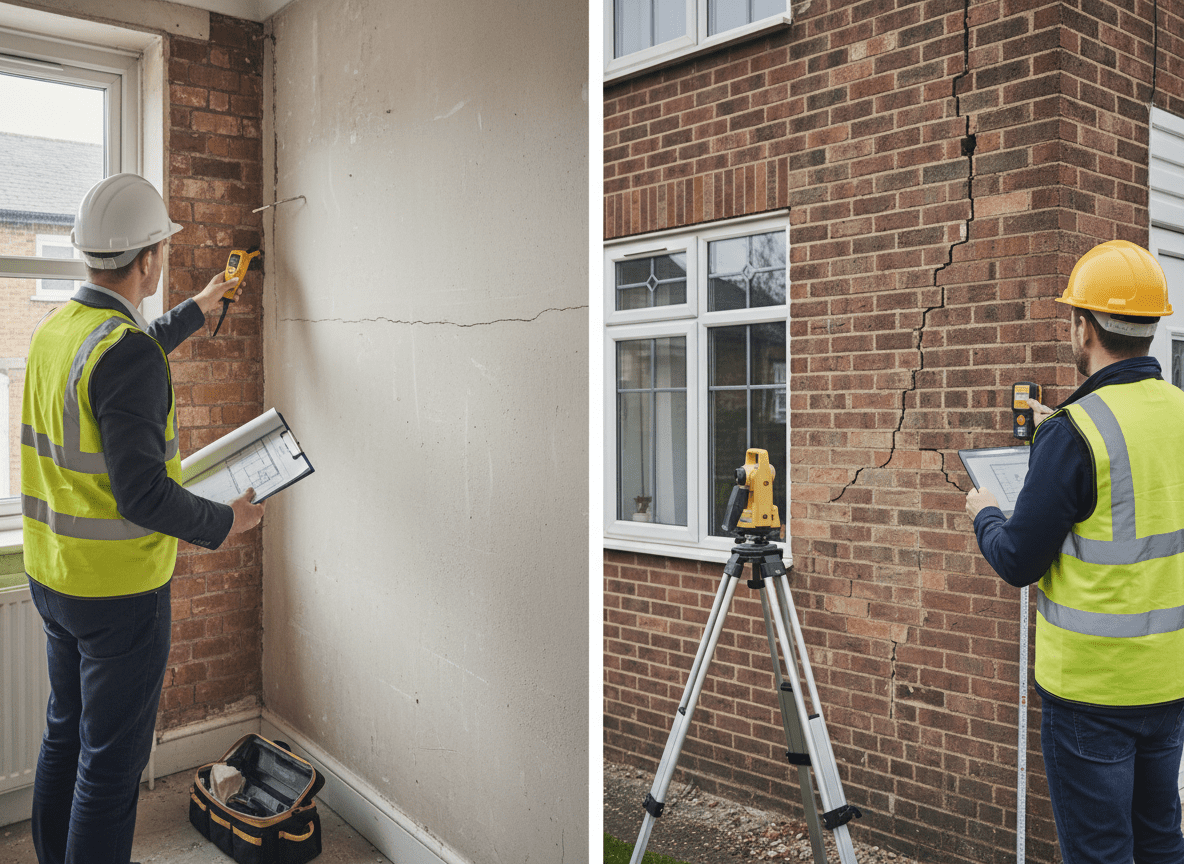
Serving a party wall notice is one step. What happens next is the part that often causes stress. Party wall matters are one of our specialist surveys, alongside expert witness, measured and drone surveys.
A lot of homeowners assume that if a neighbour dissents, the project stops or turns into a dispute straight away. That is not usually the case. A dissent does not automatically mean hostility. It usually means the formal party wall process now needs surveyors to step in and deal with the next stage properly. Lyman Marshall’s live party wall service page says that if an adjoining owner dissents, a formal party wall award is prepared to set out rights, responsibilities, and safeguards before the work starts. :contentReference[oaicite:1]{index=1}
Quick answer: if your neighbour dissents to a party wall notice, one or two party wall surveyors are usually appointed. They then prepare a party wall award, often with a schedule of condition, so the work can move forward within a clear documented framework. Lyman Marshall’s live service page sets out exactly that sequence. :contentReference[oaicite:2]{index=2}
Simple rule: a dissent does not usually end the project. It moves the project into the surveyor-led stage.
Contents
What dissent actually means
In simple terms, a dissent means your neighbour has not agreed to let the matter proceed on the basis of notice and consent alone. It does not automatically mean they think your works are unreasonable. It often means they want the protections of the formal process in place before work begins.
Lyman Marshall’s loft conversion and extension guidance explains the basic responses after notice: the neighbour may consent, dissent and appoint a surveyor, or agree to a single surveyor acting impartially for both sides. If dissent happens, surveyors become involved to prepare the award and protections around the work. :contentReference[oaicite:3]{index=3}
This point matters because many building owners read “dissent” as “dispute”. Those two things are not always the same. A dissent can be calm, procedural, and expected. It is often just the route that moves the project into a more documented stage.
The first steps after dissent
Once a notice has been dissented to, the next job is not to argue with the neighbour. The next job is to get the appointment process right.
The live Lyman Marshall party wall page says that if consent is not given, each party may appoint a surveyor, or both parties may agree to use one single impartial surveyor. That is the first key fork in the road. :contentReference[oaicite:4]{index=4}
At this stage, the practical sequence usually looks like this:
- the dissent is noted
- a surveyor is appointed for each side, or one agreed surveyor is chosen
- the surveyor or surveyors review the proposed works
- a schedule of condition may be arranged
- a party wall award is prepared
That is why the period after dissent is not dead time. It is working time. The formal framework is being built.
Who appoints the surveyor or surveyors
There are usually two broad routes.
One agreed surveyor
Both parties can agree to use one surveyor who acts impartially. The Lyman Marshall service page and loft conversion guide both refer to this option. The point is not that the surveyor “belongs” to one side. The point is that both parties accept one professional to handle the matter fairly. :contentReference[oaicite:5]{index=5}
Separate surveyors
Each side can appoint their own surveyor. Those surveyors then deal with the matter and prepare the award between them. This is often the route where either side wants their own professional involved from the start.
Neither route is automatically better in every case. The right fit depends on the relationship between neighbours, the complexity of the proposed works, and how comfortable both sides are with a single appointment.
Agreed surveyor
One impartial surveyor acts for the matter itself, not as an advocate for one side.
Two surveyors
Each party appoints one surveyor, and the surveyors deal with the award process together.
Lyman Marshall’s party wall material is clear on one point throughout. The surveyor’s role is to keep the process proper, documented, and legally valid rather than to inflame it. :contentReference[oaicite:6]{index=6}
What the party wall surveyor actually does next
This is where the practical value of the surveyor becomes clearer. Once appointed, the surveyor does far more than just “sign off” the notice.
Lyman Marshall’s service page says its party wall work covers notices, awards, and schedules of condition. Its article on party wall agreements says a party wall surveyor acts as an impartial expert, assessing the proposed works, protecting both sides’ rights, and helping make sure the process is handled correctly before work starts. :contentReference[oaicite:7]{index=7}
In practice, that usually involves:
- checking what works are proposed
- reviewing whether those works fall within the party wall framework
- considering what protections and conditions are needed
- recording the neighbouring property’s condition before work begins
- setting out how and when works should proceed
- preparing the party wall award
This is why the surveyor’s role is not just administrative. It is protective. The process is there to reduce confusion, reduce future arguments, and create a record of what was agreed before anyone starts cutting into walls, excavating near boundaries, or altering shared structures.
What goes into a party wall award
The award is one of the most important outputs after a dissent.
Lyman Marshall’s live party wall service page says the award sets out rights, responsibilities, and safeguards for all parties during the works. Its broader guide to getting a party wall agreement explains that the document exists to protect both sides and provide clear rules on how and when the work will be carried out. :contentReference[oaicite:8]{index=8}
While every case differs, the award may deal with points such as:
- what works are covered
- when they may start
- how access is handled if needed
- what protections apply to the adjoining property
- what records have been made of existing condition
- what happens if damage is alleged later
This is the part many homeowners underestimate. They think the notice is the main event. In reality, where a dissent occurs, the award is often the document that gives the project structure.
| Stage | What happens | Why it matters |
|---|---|---|
| Notice served | The building owner formally notifies the adjoining owner | Starts the formal process correctly |
| Dissent received | The adjoining owner does not consent | Triggers the surveyor-led stage |
| Surveyor appointment | One agreed surveyor or two separate surveyors are appointed | Creates the professional framework for the matter |
| Schedule of condition | The adjoining property may be recorded before works start | Helps avoid later arguments over damage |
| Party wall award | The formal document is prepared | Sets out how the works can proceed and what protections apply |
Why the schedule of condition matters
This is one of the most practical parts of the process, and one of the easiest to understand.
Lyman Marshall’s service page says the condition of the neighbouring property is documented before work begins to protect against false claims or later disputes. :contentReference[oaicite:9]{index=9}
That matters because once work starts, memories become selective. Small cracks, scuffs, historic marks, and long-standing defects can suddenly become points of argument if they were never recorded properly in advance.
A schedule of condition does not accuse either side of anything. It simply creates a snapshot. It says, in effect, “this is what was there before the works began.”
That is useful for both parties:
- the adjoining owner has a clear record of their property’s pre-work condition
- the building owner has protection against later claims that do not match the recorded condition
This is one reason Lyman Marshall repeatedly stresses early, proper handling of party wall matters. Good records reduce problems later. :contentReference[oaicite:10]{index=10}
Will this delay the work?
It can affect timing, yes. A dissent usually means you now need the appointment process, the schedule of condition if required, and the award before works proceed in the formal way. That adds a stage.
That said, delay is not the same as disaster. Lyman Marshall’s article on acting early says early instruction saves time and money because it reduces last-minute friction, project disruption, and avoidable errors in the party wall process. :contentReference[oaicite:11]{index=11}
This is a good example of why early action matters. If notice is served late, and dissent follows, the project timetable can feel tight very quickly. If you deal with the process early, the surveyor has time to do the job properly before builders are due on site.
So the honest answer is this:
- yes, dissent usually adds process time
- no, it does not usually kill the project
- the real risk is leaving everything too late
Common mistakes after a dissent
Seeing dissent as a personal attack
It often is not. Many adjoining owners simply want the formal protections in place. That is what the process is for.
Starting work too early
This is one of the biggest risks. If the formal stage is still being dealt with, pushing ahead can create avoidable legal and neighbour problems. Lyman Marshall’s loft conversion guidance warns that failing to follow the proper process can lead to disputes, delays, and costly complications. :contentReference[oaicite:12]{index=12}
Trying to handle everything informally after a formal dissent
Once dissent has happened, the safer route is to let the surveyor process do its job. Informal chats may still help neighbour relations, but they do not replace the formal stage.
Waiting too long to instruct a surveyor
Lyman Marshall’s party wall content makes early involvement a recurring theme for good reason. Early involvement keeps the project moving more cleanly. :contentReference[oaicite:13]{index=13}
Choosing the wrong focus
After dissent, the goal is not to “win” against the neighbour. The goal is to get the works documented properly so both sides are protected and the project can move forward in the right way.
What you should do next
If your party wall notice has been dissented to, the sensible next step is to move straight into the surveyor appointment stage rather than letting the issue drift.
A practical checklist looks like this:
- confirm the response and what form of dissent has been made
- agree whether one surveyor or two surveyors will be appointed
- provide the proposed works information clearly
- allow time for any schedule of condition inspection
- wait for the party wall award process to complete properly
Lyman Marshall’s live service page says it guides clients through the full process from notices to final award, with schedules of condition and formal documentation where needed. Its disputes article also stresses that clear, legally valid documentation reduces risk for both building owners and adjoining owners. :contentReference[oaicite:14]{index=14}
That is the key point to keep hold of. A dissent is not the end of the road. It is the point where the matter becomes more structured.
After consent
The matter may proceed more simply, provided the notice stage has been handled properly.
After dissent
The matter moves into surveyor appointment, recording, and award preparation before the work proceeds.
For many homeowners, that structure is exactly what reduces risk. It creates a proper framework, a proper record, and a clearer route from notice to works.
Speak to a surveyor
If your neighbour has dissented to a party wall notice and you need clear advice on the next step, speak to Lyman Marshall Chartered Surveyors for help with notices, awards, and schedules of condition.
FAQs
Does a dissent mean my neighbour has blocked the work?
Not usually. A dissent usually means the matter now goes through the surveyor-led stage, with a party wall award prepared before the works proceed. Lyman Marshall’s live guidance explains that sequence clearly. :contentReference[oaicite:15]{index=15}
Do we always need two surveyors after a dissent?
No. Lyman Marshall’s live party wall guidance says both parties can agree to use one single impartial surveyor, or each party can appoint their own. :contentReference[oaicite:16]{index=16}
What does the party wall award do?
It sets out the rights, responsibilities, and safeguards around the proposed works. Lyman Marshall’s service page says it is the formal document used when consent is not given. :contentReference[oaicite:17]{index=17}
Why is a schedule of condition useful?
It records the adjoining property before work starts, helping protect both sides if damage is alleged later. That is how Lyman Marshall describes its purpose on the live party wall page. :contentReference[oaicite:18]{index=18}
Will dissent delay my project?
It can add time because surveyor appointment and award preparation now need to happen. Lyman Marshall’s article on acting early says early party wall input saves time and money by reducing avoidable delay. :contentReference[oaicite:19]{index=19}
What is the safest thing to do after a dissent?
Move promptly into the surveyor appointment stage and let the formal process be handled properly. Trying to rush ahead without that framework is where bigger problems often start. :contentReference[oaicite:20]{index=20}