Expert Witness • Property Disputes • Surveyor Guidance
Property disputes can arise in many situations — a claim over building defects, a party wall disagreement with a neighbour, or a landlord and tenant dispute about disrepair.
When a dispute reaches a formal stage, an expert witness surveyor may be required to provide an independent professional opinion.
This guide explains what an expert witness surveyor does, the types of cases they are involved in, and what to expect from the process.
If you are involved in a property dispute and are unsure whether you need an expert witness, this guide will help you understand your options.
Quick answer
An expert witness surveyor is a RICS-qualified surveyor who provides an independent, impartial opinion in legal or formal dispute proceedings.
Their duty is to the court or tribunal — not to the client who instructs them.
Find out more: LM Surveyors Expert Witness service.
When is one needed?
Expert witnesses are typically needed when a property dispute escalates beyond informal negotiation to court, tribunal, arbitration, or mediation.
Early involvement can sometimes help resolve disputes before they reach that stage.
In this guide
What Is an Expert Witness Surveyor?
An expert witness surveyor is a chartered surveyor who has been instructed to provide expert evidence in legal or formal proceedings involving property.
Unlike a standard surveyor report prepared for a client, an expert witness report must comply with specific court rules. The surveyor’s overriding duty is to the court or tribunal — their role is to give their honest, impartial professional opinion regardless of who is paying them.
What makes an expert witness different
- Independence: They must give their genuine professional view, even if it does not support the party who instructed them
- Court obligations: Expert witnesses are bound by Civil Procedure Rules (Part 35) or equivalent tribunal rules
- Qualifications: They must have relevant expertise and professional qualifications — typically MRICS or FRICS membership
- Declaration: They sign a declaration confirming their independence and understanding of their duty to the court
Important: An expert witness is not an advocate. They do not argue your case. They provide an objective professional opinion on the technical matters in dispute, and that opinion may or may not fully support your position.
When Do You Need an Expert Witness Surveyor?
You may need an expert witness surveyor when a property dispute reaches a stage that involves formal proceedings — or when you need independent professional evidence to support a claim or defence.
Common triggers
- A neighbour dispute escalates to court over an access or right-of-way issue
- You are pursuing a claim for building defects against a contractor or developer
- A landlord and tenant dispute over disrepair or dilapidations reaches tribunal
- A property insurance claim is disputed and requires independent assessment
- A party wall dispute cannot be resolved and reaches formal arbitration
- You are involved in a professional negligence claim against a surveyor
- A planning or compulsory purchase dispute requires independent valuation evidence
Sometimes an expert witness is instructed early — before proceedings formally begin — to help both parties understand the technical facts and potentially settle without going to court.
Types of Property Disputes That May Require Expert Evidence
Building defects and construction claims
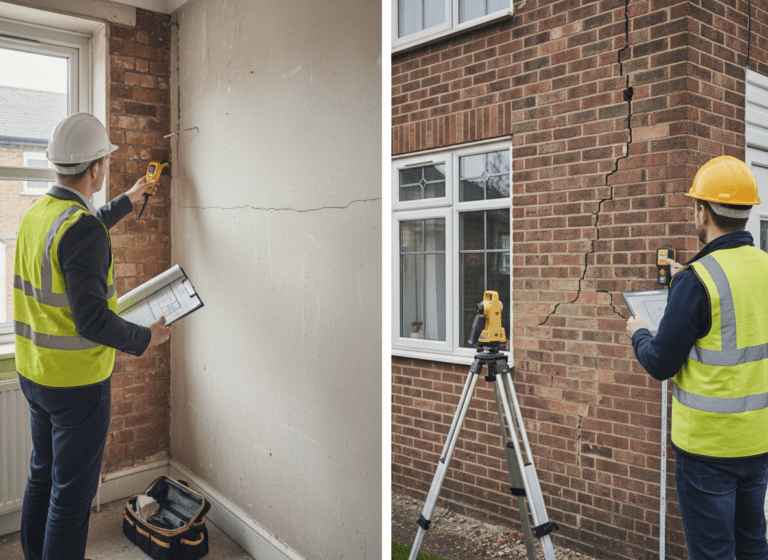
If a property has serious defects — structural movement, damp, roof failure — and there is a dispute about who is responsible or the extent of the damage, an expert witness surveyor can assess the defects, identify the cause, and provide an opinion on liability and repair costs.
This is common in disputes between buyers and sellers, homeowners and contractors, or new-build purchasers and developers.
Landlord and tenant disputes — dilapidations
At the end of a commercial lease, landlords often serve a schedule of dilapidations claiming the tenant has failed to maintain or repair the property to the required standard. Disputes over the scope and cost of repairs are common.
An expert witness surveyor can assess the schedule, inspect the property, and provide an opinion on what repairs are reasonably required and what they should cost.
Party wall disputes
Under the Party Wall etc. Act 1996, neighbours have rights and obligations when building work affects shared walls or boundaries. If the dispute cannot be resolved between appointed surveyors, a third surveyor may need to determine it — and their decision is binding.
Professional negligence claims
If a surveyor, architect, or building professional has made an error that has caused financial loss, an expert witness surveyor may be needed to assess whether the original professional fell below the standard expected of a competent practitioner.
Insurance disputes
Where an insurer disputes the cause or extent of property damage — subsidence, flooding, fire — an independent expert witness surveyor can provide an impartial technical assessment to help resolve the claim.
What Does an Expert Witness Surveyor Do?
The process typically follows these steps:
1. Initial instruction
The surveyor is instructed by one party (or jointly by both parties) and given a clear statement of the issues in dispute. They review relevant documents — survey reports, planning documents, contracts, correspondence — before inspecting the property.
2. Property inspection
The surveyor carries out a detailed inspection relevant to the matters in dispute. This may involve:
- Assessing defects and their cause
- Reviewing building work against approved drawings or specifications
- Checking completed work against approved drawings and specifications
- Measuring and recording condition
3. Research and analysis
The surveyor researches relevant standards, case law, and technical guidance to support their opinion. They consider all the evidence — including evidence that may not support the instructing party’s position.
4. The expert report
The surveyor produces a formal expert witness report, prepared in accordance with court or tribunal requirements. This includes their qualifications, a summary of the issues, their findings, and their professional opinion.
5. Expert meetings and joint statements
In many proceedings, expert witnesses from each party are required to meet without solicitors to identify agreed facts and narrow the issues in dispute. They produce a joint statement recording what they agree and disagree on.
6. Court or tribunal attendance
If the matter proceeds to a hearing, the expert witness may be required to give oral evidence and be cross-examined on their report.
Early resolution: Many disputes settle before reaching a hearing once both parties have independent expert evidence. An expert witness surveyor can help bring clarity to the technical facts, which often makes resolution easier to achieve.
What the Expert Witness Report Includes
An expert witness report is a formal document prepared to comply with Civil Procedure Rules (CPR Part 35) or relevant tribunal rules. It typically includes:
- Surveyor’s qualifications and experience
- Statement of instructions received
- Summary of the issues in dispute
- Documents reviewed and inspection details
- Factual findings from inspection
- Expert opinion on each issue
- Summary of conclusions
- Statement of truth and declaration of independence
The report must clearly distinguish between factual observations and professional opinion. The surveyor must be prepared to defend their opinion in court if required.
Single Joint Expert vs Party-Appointed Expert
| Type | What it means | When used |
|---|---|---|
| Single Joint Expert (SJE) | One expert instructed and jointly agreed by both parties | Lower-value disputes, small claims, where costs must be proportionate |
| Party-appointed expert | Each party instructs their own expert | Higher-value disputes or complex technical matters where both sides need independent evidence |
Courts typically encourage single joint experts in lower-value cases to keep costs proportionate. In complex or high-value disputes, each party may instruct their own expert, with a meeting between experts required before any hearing.
How to Find the Right Expert Witness Surveyor
Not all surveyors are experienced in expert witness work. When looking for an expert witness, consider the following:
- RICS qualification: The surveyor should hold MRICS or FRICS membership
- Relevant specialism: Their expertise should match the type of dispute — building defects, party wall, commercial, or residential
- Expert witness experience: Ask about their previous involvement in court or tribunal proceedings
- Awareness of CPR Part 35: They should be familiar with court rules on expert evidence
- Independence: They should have no conflicts of interest with either party
It is worth discussing your situation with a surveyor before formally instructing them. This gives you a sense of their approach and whether they have the right experience for your type of dispute.
Frequently Asked Questions
Discuss your property dispute with a surveyor
LM Surveyors provides expert witness surveyor services across Lincolnshire, Nottinghamshire, and surrounding areas. If you are involved in a property dispute and need independent professional evidence, contact us to discuss your situation. Expert witness reporting is one of our specialist surveys.